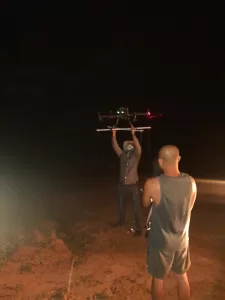
Drone Launch with Magnetics sensor
Drone Magnetics at night landing
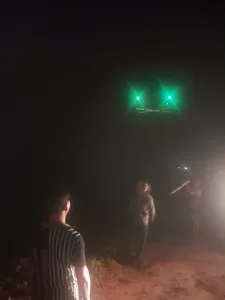
Drone Magnetics -- June 2025
Drone Magnetic Launch and retrieval at night
This is a powered drone with magnetic sensors below (suspended). It fly's at between 20 and 40 m and collects 20 to 50 km of data per hour
The data is geolocated
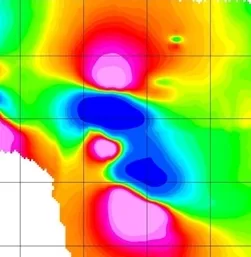
Drone Magnetics data example
and time stamped. It backed with a groundlevel separate unit to correct for drift,
The data processing is included and we can produce a variety of registered images and give interpretation to what ever level you require.
Our experience is extensive and we can collect magnetic data in a number of modes
Magnetic s is used for Gold, Copper Porphery, Geology Structure and Mapping
How does it work
Drone magnetics is a geophysical survey technique that uses an unmanned aerial vehicle (UAV) equipped with a magnetometer to measure variations in the Earth's magnetic field. This allows for the mapping of subsurface features, such as geological structures for mineral exploration, buried metal objects, or unexploded ordnance (UXO), in a fast, efficient, and non-invasive way. Its the problem resembling the Fermi paradox, we cant see it but we know its there, how to find.
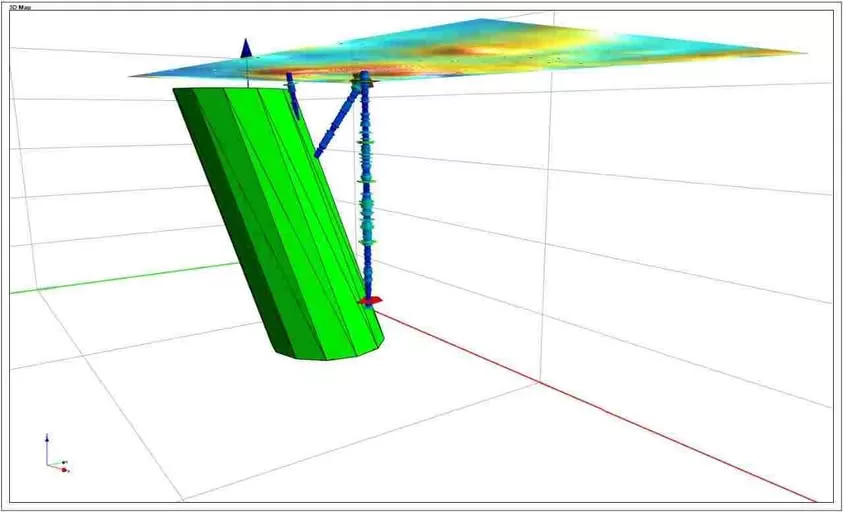
3d Diorite Intrision
Diorite 3d -- May 2025
This is a recent project
It shows a view of a magnetic target with drill hole intersections to show target model accuracy
3d Imagery really helps to understand the situation,
We find 3d visualization in this mode is powerful and help to show to non technical stakeholders features of the data and interpretation
Ground magnetics
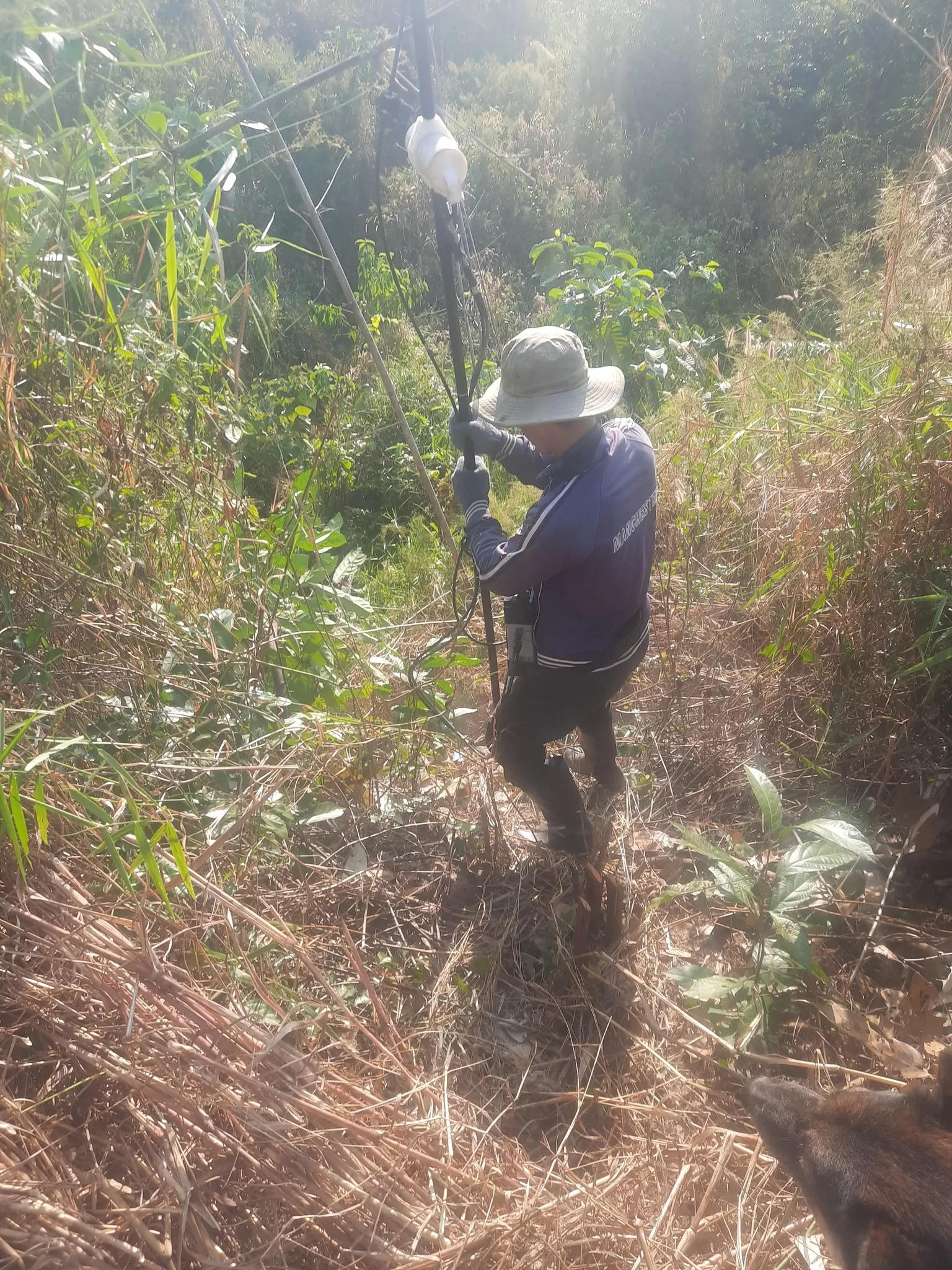
Ground Magnetics -- Jan 2025
Surveys in jungle to locate Mineral depsots, ---- challenging
The big plus is these surveys modest cost, fast to do and because on ground give much better resolution and target location
Groundsearch have run comparisons with airborne magnetic versus ground magnetic , the resolution improves dramatically, and gives finer features that are easier to understand
We have drone capability also
How does it work
Ground magnetics is a geophysical method used to measure variations in the Earth's magnetic field to map underground geological structuresm Mapp Cooper porphyritic deposits , and Gold and locate buried objects. By using a magnetometer, geophysicists can detect subsurface anomalies in magnetic properties, which helps in identifying different rock types and structures like faults, folds, and mineral deposits such as iron ore and other metallic ores. The data is often used for mineral exploration, environmental assessments, and geological mapping.